






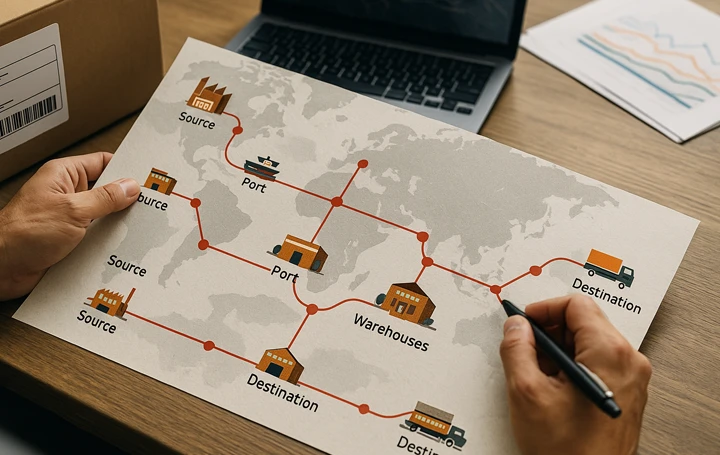
Accurate supply chain mapping improves efficiency by giving businesses a clear, end-to-end view of how materials move, from sourcing to delivery. That visibility helps identify delays, improve routes, cut costs, and anticipate risks. It’s the difference between reacting and planning ahead.
Whether you’re managing shipments, inventory, or multi-site logistics, mapping turns a complex web into something you can act on. Here’s how it works.
1. Pinpoint Bottlenecks Before They Spread
When one step slows down, the whole chain feels it. Accurate mapping shows you:
- Where delays stack up (e.g., customs hold-ups, vendor backlogs)
- How far each stage sits from your next critical action
- Whether the problem is a one-off or a pattern
A manufacturer that mapped its inbound shipping zones found consistent lags with a particular port. Re-routing to an inland rail hub shaved off two days per container—without increasing costs.
2. Optimize Inventory Movement, Not Just Location
Knowing where your inventory sits is just one layer. Mapping shows:
- How fast items move between facilities
- Where inventory piles up due to mismatch or lack of demand
- Whether replenishment cycles match actual usage patterns
Teams using visual mapping cut down redundant stock movements by simply aligning buffer locations with demand spikes. Inventory turnover increased, while warehouse overflow costs dropped.
3. Reduce Transportation Spend Without Guesswork
With accurate mapping, you can see:
- Your most expensive routes
- Where backhauls or multi-stop consolidation make sense
- Where time-sensitive vs. cost-sensitive shipments should diverge
Instead of reactive shipping, teams can plan better loads and choose the right carrier for the job. Even basic changes—like grouping regional deliveries—can add up quickly.
4. Improve Communication Across Teams and Sites
One of the underrated wins of mapping? Alignment.
When everyone sees the same flow:
- Logistics stops blaming sourcing
- Procurement understands lead times
- Customer service knows where things are stalled
A shared supply chain map is a living tool for collaboration. It brings clarity, especially during high-pressure situations like product launches or seasonal surges.
5. Spot Risks Before They Become Problems
Mapping reveals:
- Single points of failure (e.g., one supplier, one transit path)
- Geopolitical, weather, or labor risks tied to certain regions
- Gaps in backup suppliers or alternate routes
A food distributor layered mapping with historical storm data to shift its hurricane-season storage locations. Result: fewer spoilage losses and more predictable deliveries.
6. Track Ethics and Compliance More Clearly
Whether you’re sourcing raw materials or routing finished goods, mapping helps:
- Identify origin points for regulatory or sustainability audits
- Trace material flow to confirm ethical sourcing
- Provide documentation for customer or legal inquiries
Retailers under ESG pressure use supply chain maps to validate which goods pass through green-certified routes or vendors. It’s not just good PR—it’s traceable accountability.
Where Accurate Mapping Paid Off in Real Terms
A mid-sized distribution company based in the Midwest was struggling with inconsistent lead times on their regional shipments. On paper, they had the right inventory and carriers—but delays still hit every third order.
After mapping their supply chain in detail, they found that one third-party warehouse was batching shipments in 72-hour intervals, instead of daily pickups. This misalignment alone added 2–3 days to every affected delivery.
They shifted to a nearby facility offering daily load-outs and used color-coded inventory labels to clearly flag urgent shipments. The results:
- On-time delivery rate jumped from 82% to 96% within one quarter
- They reduced customer service inquiries tied to “where’s my order?” by over 50%
- Lost labor hours chasing down tracking issues dropped substantially
The biggest insight? The issue wasn’t technology or talent—it was visibility. Mapping exposed a gap that had cost them thousands every month.
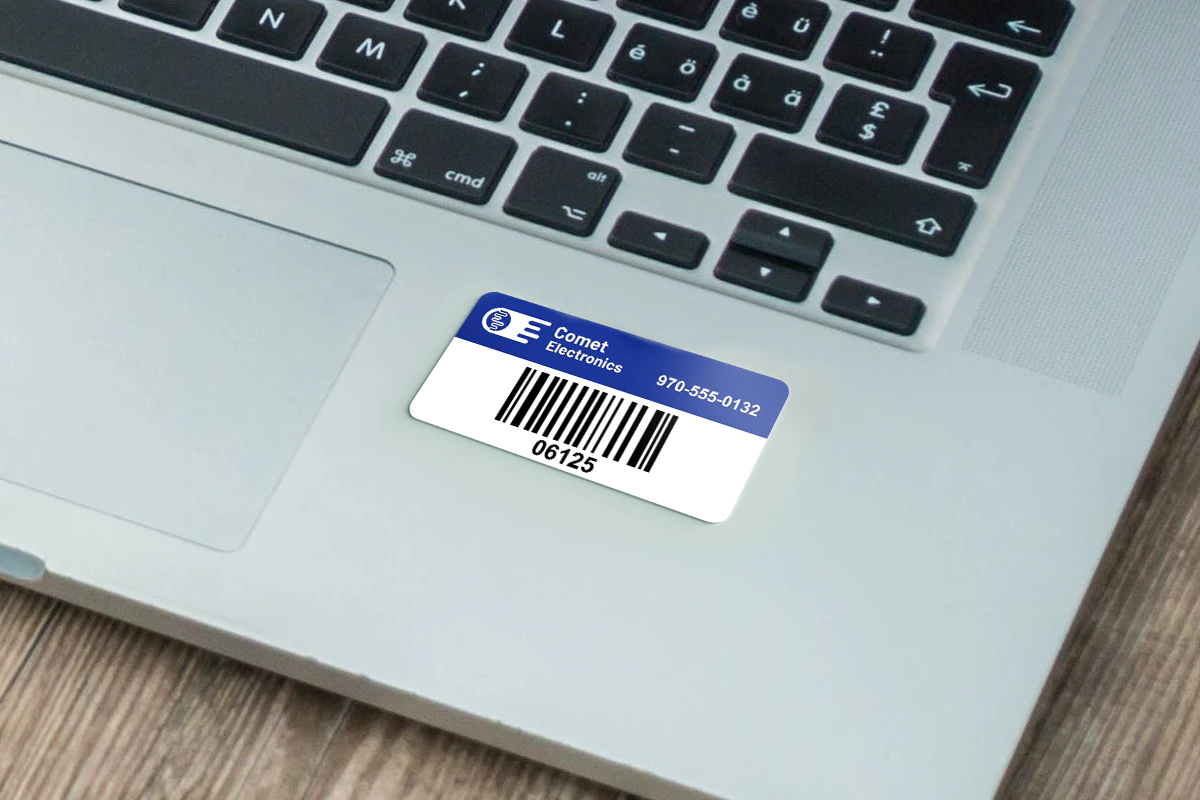
Label Your Inventory for Better Mapping
Mapping works best when the data behind it is clean and visible. That starts with well-labeled inventory:
- Clear asset IDs help you track location and movement
- Labels with barcodes or QR codes tie assets to your system
- Durable print holds up through storage, handling, and transit
If you’re building or refining your visibility system, our inventory labels are used in warehousing and logistics environments where durability and clarity matter.
Accurate Supply Chain Mapping FAQs
Supply chain mapping is the process of visually documenting the entire flow of goods, materials, and information from source to final delivery. It helps identify inefficiencies, risks, and areas for improvement.
It highlights inefficient routes, delays, and redundancies. With that insight, businesses can optimize shipping, inventory storage, and vendor selection—reducing waste and unnecessary spending.
Many teams start with spreadsheets and flowcharts. More advanced users adopt ERP systems, GIS tools, or supply chain visibility platforms depending on scale and complexity.
Yes. Even a simple map of your suppliers, shipping steps, and inventory flow can uncover issues—like mismatched reorder points or poor transit timing—that cost time and money.
Labels with clear asset IDs and scannable codes let teams track inventory movement. Without accurate data capture, even the best mapping tools can’t reflect what’s really happening.
Anytime you add a new vendor, change a shipping route, shift warehouse space, or adjust production steps—your map should reflect those changes. Regular reviews (quarterly or biannually) help spot evolving inefficiencies.